ByJohn A
What Are Utility Tokens in Blockchain Projects?
Utility tokens in blockchain projects grant access to a product or service rather than ownership. They enable practical use within an ecosystem, support decentralized participation, and often tie value to functionality rather than equity. Distinctions from asset or governance tokens matter for regulatory and privacy considerations as projects evolve. The balance of incentives, interoperability, and risk shapes the token’s trajectory. For practitioners, a clear framework is essential to assess applicability and constraints before proceeding.
What Are Utility Tokens and Why They Matter
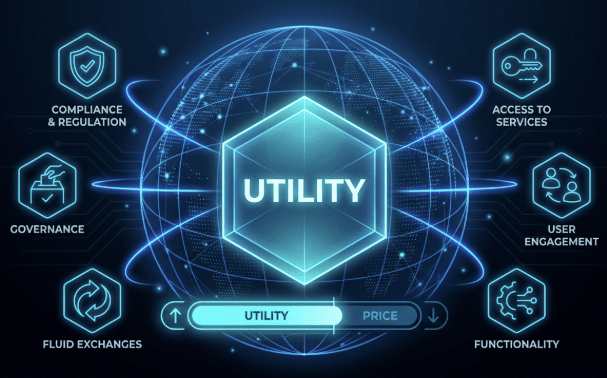
Utility tokens are digital assets that grant holders access to a specific product or service within a blockchain ecosystem rather than representing ownership in a company. They enable practical participation while preserving decentralization principles. Their value rests on utility rather than equity. Clear token governance frameworks and compliance considerations shape adoption, trust, and interoperability, guiding risk management, transparency, and sustainable long-term use.
How Utility Tokens Differ From Other Token Types
How utility tokens contrast with other token types becomes clearer when one examines their fundamental purposes, governance, and risk profiles. These distinctions emphasize function over speculation, guiding participants toward concrete utility and scalable governance models.
In contrast, other tokens may resemble assets or governance proxies with differing token economics, liability structures, and incentive alignments, potentially increasing systemic risk and complexity.
Key Use Cases and Mechanisms Driving Utility Tokens
The mechanisms that underpin utility tokens are best understood by examining the concrete use cases they enable within blockchain ecosystems. These tokens facilitate access to services, governance participation, and incentive alignment, while maintaining interoperable interfaces across platforms. Critical considerations include scalability challenges, which can constrain throughput and cost structures, and regulatory uncertainty, shaping compliance burdens and long‑term viability for diverse stakeholders.
See also: wwwtheboringmagazine.com
Risks, Valuation, and a Practical Checklist to Evaluate Utility Tokens
This section assesses the risks, valuation considerations, and a practical checklist for evaluating utility tokens within blockchain projects. The assessment emphasizes clarity about privacy concerns and governance models, noting market volatility, token economics, regulatory uncertainty, and implementation risk.
A concise checklist covers purpose, use cases, liquidity, access controls, data handling, disclosure, security, and ongoing monitoring to support informed, prudent decisions.
Conclusion
Utility tokens enable access to services within a blockchain ecosystem, rather than granting ownership or profit rights. They incentivize participation, align incentives among users, and support scalable, privacy-conscious governance. Distinguishing from asset or governance proxies, utility tokens emphasize functionality and interoperability, evolving with regulatory landscapes and product needs. Use cases span access, payments, and resource allocation, underpinned by careful risk assessment and valuation models. In short, they are practical catalysts for decentralized participation, though their value hinges on sustained utility and thoughtful design. Anachronism: consider a “telegraph-token” delivering messages in a modern network to illustrate unintended past-to-present frictions.